Caring for Older and Collectible Firearms, and Where a Bore Coating Fits
Old guns need a lighter hand and a better plan than a modern pistol, and a coating is only one part of that plan.
October 27, 2026 · 4 min read
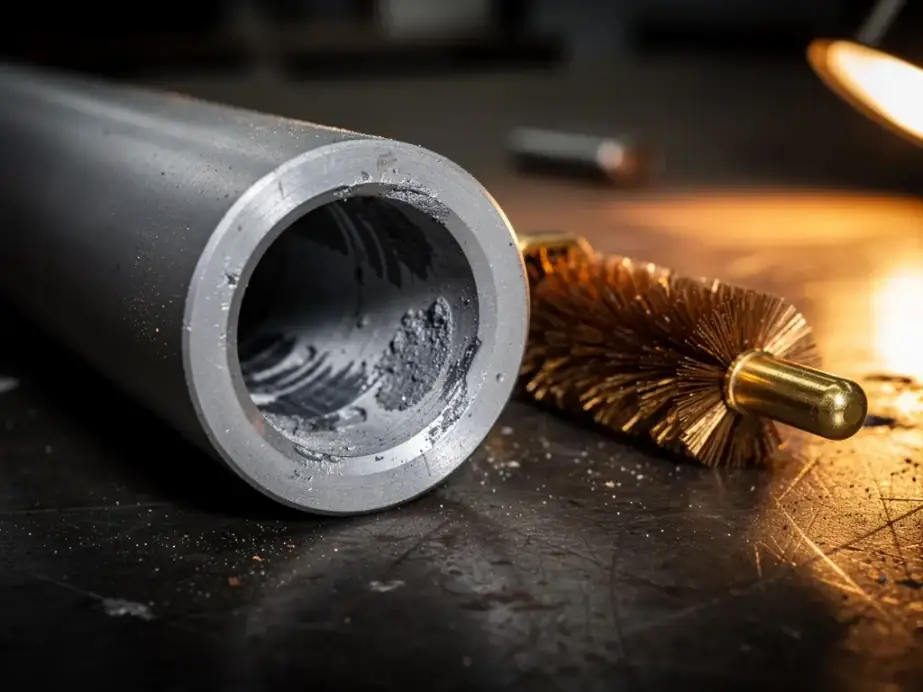
Old guns carry a different kind of responsibility than a pistol you bought last year. The steel is often softer, the finish may be original, the bore may carry pitting from decades of surplus ammunition or black powder, and replacement parts can be hard to find. Some are worth real money, and some are worth more as heirlooms. A few habits keep them in good shape without hurting them.
Start by looking, not cleaning
Before you put anything in the bore, look at the whole gun. Note the finish, any markings and any rust or pitting. A few phone photos record the condition, so you'll know later whether your care changed anything. Collectors tend to prize original finish more than a shiny bore, so keep aggressive scrubbing and refinishing off the table unless you know what you're doing. If a piece is valuable enough that a mistake would hurt, ask a gunsmith or appraiser before you do anything beyond a gentle wipe-down.
Know what you're cleaning out
Black powder and many military surplus loads leave residue that holds moisture and attacks steel. Corrosive primers, common in older surplus ammunition, do the same. The usual advice is to clean the same day you shoot, with warm water-based solutions that dissolve the salts, followed by a thorough dry and a light coat of oil. Solvents made for modern smokeless powder residue don't always handle those salts. Leaving a dirty bore for the weekend is how a good barrel turns into a pitted one.
Use gentle tools
- A brass or coated rod and a properly fitting jag. Avoid bare steel rods and stiff steel brushes, which can scratch soft steel and wear the crown.
- Bronze or nylon brushes sized for the bore, pushed through in one direction instead of being dragged back and forth against the rifling.
- Plenty of cotton patches in a proper fit, plus rags and a soft brush for the exterior and the tight corners.
- A bore light, so you can see what you're doing instead of guessing.
Revolvers and long rifles each have their own spots
Cap-and-ball revolvers, such as the reproduction 1858 Remington style made by Pietta, have chambers, a cylinder pin, a forcing cone and a nipple area that all collect fouling. Clean every chamber, not only the barrel. Long rifles from the 1800s, and surplus rifles like the Mosin Nagant and the Enfield, have long barrels where fouling hides at both ends, so look down the bore with a light from each side.
Lead in old barrels
Many old rifles and revolvers are shot with soft lead balls and cast bullets, either because that's what they were designed around or because jacketed bullets can be hard on old steel. Soft lead with black powder or low-pressure loads leaves a different kind of mess than a modern hot-loaded pistol, but it's still lead on steel. It narrows the bore, hurts accuracy and takes time to remove. That's the situation a bore coating is aimed at.
Where a coating fits
Pb Blocker was originally formulated for lead build-up in Glock barrels and later found to work on lead, plastic and copper, and the product page says it works in all firearms. One customer has put that to work on some old iron. Chuck Hudson of Edgewood, NM, wrote that he has treated all of his guns, from an 1833 long rifle to his Enfield and Mosin Nagants, along with an 1858 Pietta Remington revolver. About the lead, he wrote: "I push a WW lead bullet to jacked speeds and did not coat my barrel with lead". That's one owner's report on his own guns, not a promise about yours.
A few sensible steps apply for a valuable piece. Read the MSDS at www.54go.net. Call or email with the specific gun and ask your questions first. Try the coating on a shooter you don't mind experimenting with, not on the one in the safe. And keep the order right: the coating goes into a clean bore, so rust and old powder residue still have to come out first.
Storage counts as much as cleaning
A perfectly cleaned bore can still rust in a bad cabinet. Keep old guns in a stable, dry space, away from basements and attics where humidity swings. Skip foam-lined cases and cloth sleeves that hold moisture against the metal for months. Wipe the outside with a lightly oiled cloth, and check the bore every few months with a light. If you see a spot of rust, deal with it early. It rarely stays small.
Keep in mind what a coating is meant to do: reduce build-up and make cleaning easier. It doesn't replace oiling, storage care or inspection. Pb Blocker is $16.95 a bottle, shipped from Farmington, NM, with a 100% satisfaction guarantee on all purchases. Questions go to 214-274-4321, Monday through Saturday, 8am to 6pm, or hayes@pbblocker.com.
Pb Blocker, 214-274-4321
Call 214-274-4321More articles
Why Lead Builds Up in a Barrel, and What a Bore Coating Changes
If your patches come out gray after every range day, here is what is happening inside the bore and where a coating fits.
How to Apply Pb Blocker: The Five Steps, With Bench Tips
The label fits on a short card, and a few bench habits make each of the five steps easier to do well.